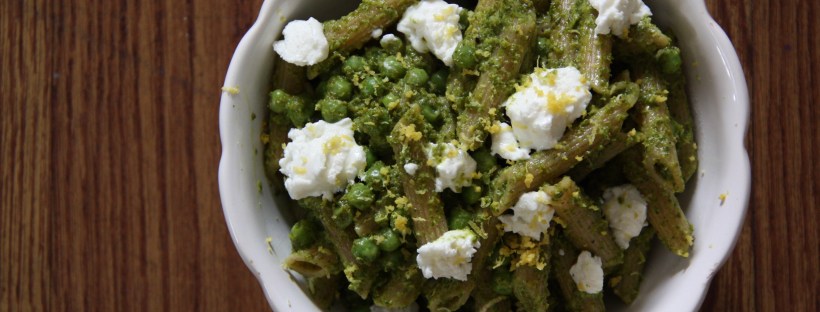
At the end of a long day in winter, yes, even winter in New Orleans, I love cozying up with a bowl of warm pasta. Maybe it’s my Italian side, but there is really nothing more comforting than pasta with homemade sauce.
Pesto is my favorite of my dad’s homemade sauces, but summer is really the only time to enjoy fresh basil. It’s certainly worth the wait, but I also like putting seasonal spins on this sauce to make it a year-round treat. In the winter, curly kale stands in for basil, adding a little nutritious punch to this green-as-can-be dish.
Put a large pot of salted water to boil over high heat. Squeeze in the juice from half a lemon.
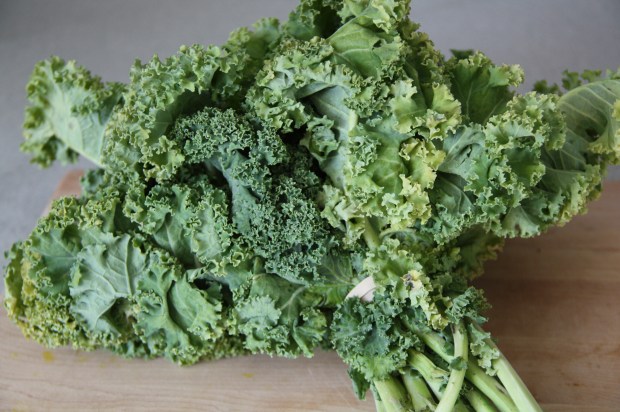
Remove the stems from the kale (add them to your veggie stock bag. See: Ginger Scallion Noodles recipe for more explanation.) Chop the kale into bite-sized pieces.
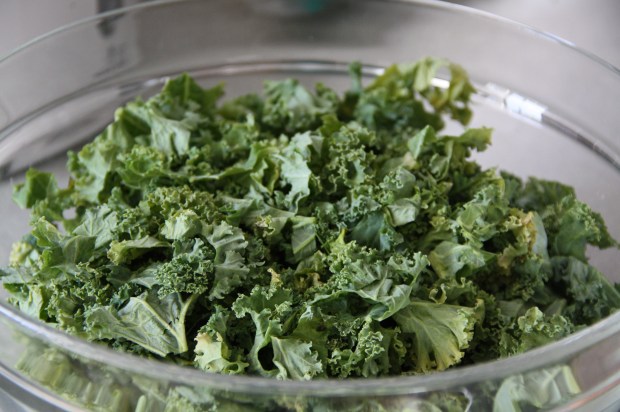
As you can see, my kale is not perfectly dark green. I had it in my fridge for about a week (luckily, it’s hearty enough to survive that) because I couldn’t decide what to do with it. This may come as a surprise, but I’m not totally bonkers for kale like most people seem to be these days. I think it gets all the fame when there are plenty of underrated “superfood” leafy greens out there like Swiss chard and collard greens. I like to give those guys the love. However, kale was in the Hollygrove box this week, and I’m happy to find a place for it as the star of this dish.
Done with kale rant now. Onto the next step. Drop the kale into the boiling water and blanch for about a minute. Transfer to a bowl. Drain the water, refill the pot with salted water, and put it on to boil again.


Next up: Toast the pine nuts. Nuts are an essential part of pesto, and I think toasting them adds another dimension of flavor. One reason I love to vegetarian cooking is that it challenges me to use a variety of techniques in one recipe to amp up the taste of the final product.
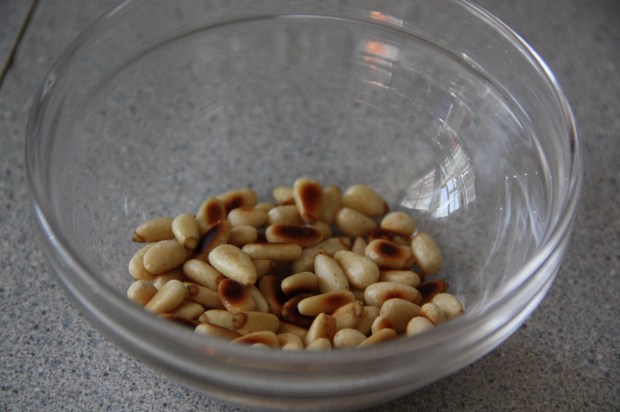
Place a dry, nonstick pan over medium heat and sprinkle the pine nuts in. Toss them in the pan for about a minute until they are brown and warm.

While I was in an epic battle against sunlight to get a decent photo, (ah, the challenges of blogging) my pine nuts crossed over to the dark side. Luckily, I saved them just in time, but yours should be a little lighter than these.
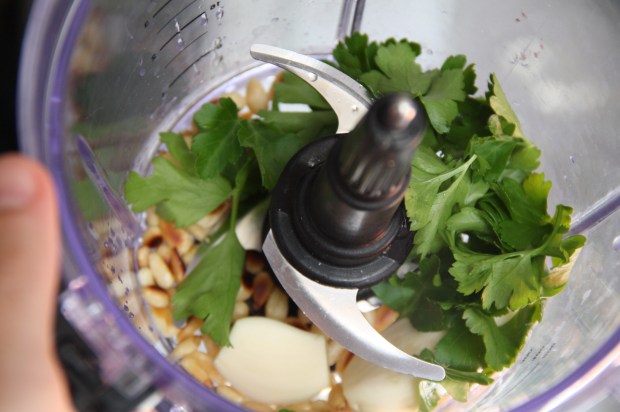
Throw the pine nuts, three large cloves of garlic, and a handful of parsley leaves into the blender. Season heavily with salt and pepper. Add the blanched kale and pulse a few times. Perhaps this is placebo, but I think it helps to give everything a few pulses before adding liquid because I think it gets the contents of the blender more evenly dispersed. This way I don’t have to fight with the blend while the kale is being pulverized and the garlic is still in big chunks.
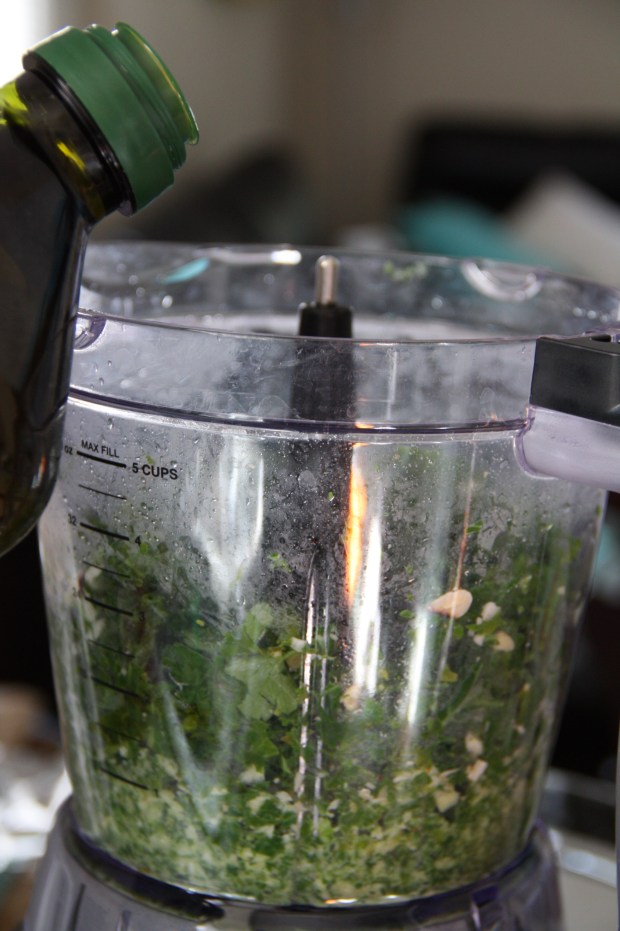
Pour in about a quarter cup of olive oil and the juice of half a lemon. As I mentioned earlier, this recipe is modeled after my dad’s basil pesto. It calls for less olive oil than the average recipe, which I love because the flavors of the other ingredients shine, and the sauce really sticks to the pasta.
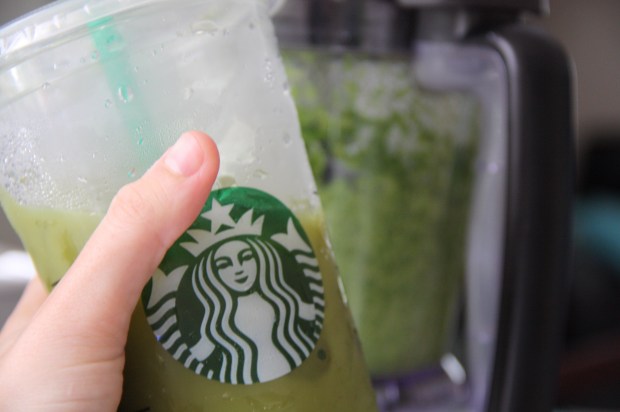
While my pesto was blending I noticed how aesthetically pleasing the contents of the blender and my Matcha tea looked together. My Starbucks order takes a whole 30 seconds to say, and it is the thing I am most ashamed of in my life. But, hey, check me out feeling like a real green goddess.
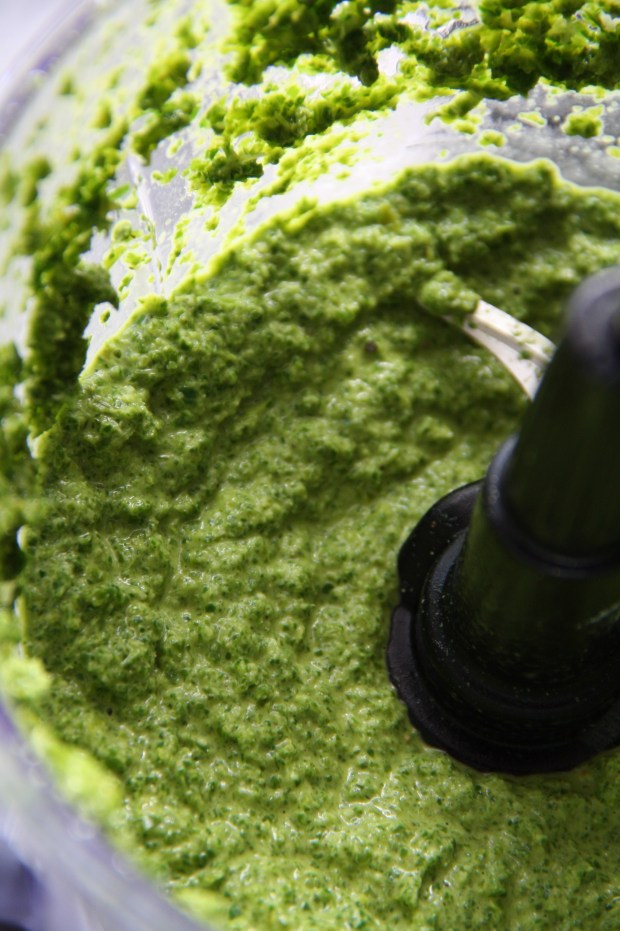
Once the sauce is incorporated and at its optimum level of gorgeousness, add a heaping dollop of goat cheese. Normally pesto is made with parmesan, but I think the goat cheese and kale work wonderfully together. This is the same goat cheese I used in the previous recipe, but guess what? I don’t even care because it is so yummy and no waste is the best waste.


Did I already say optimum level of gorgeousness? I take it back. This stage is the optimum level of gorgeousness. Brb drooling.
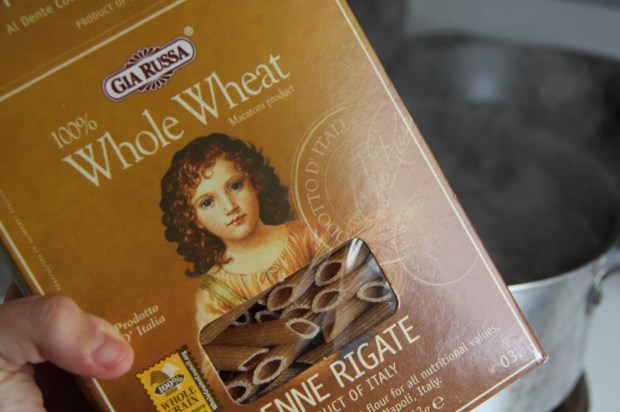
Drop the pasta into the boiling water. The brand I use sets the cooking time at 10 minutes. I set my timer for 8, so I could finish cooking the pasta in the sauce. This ensures that every noodle is coated and flavored with sauce. I use Penne Rigate because I love how the pesto gets stuck in the little ridges, but dealer’s choice on the type of noodle you use.
Fun fact: my dad wanted to name me Rigatoni after his favorite pasta, but my mom vetoed it. Joke’s on her, though, because now my name is Bug.
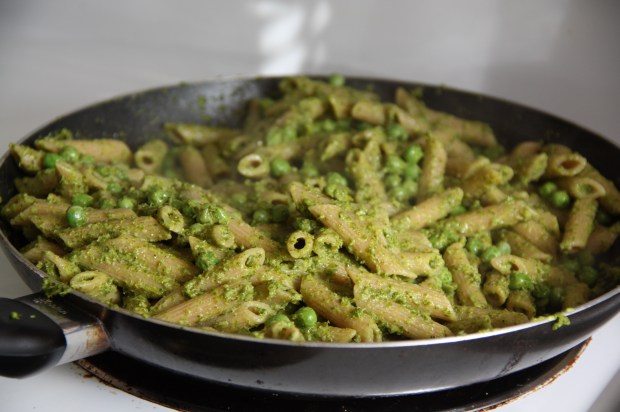
Spoon the pesto into a large, nonstick pan and add a cup and a half of thawed frozen peas. I know it’s basically sacrilegious to use frozen produce on a farm-driven blog, but they are organic and I always like to supplement my pasta dishes with some extra veggies. Please forgive me.

Once the pasta is almost cooked and the sauce is warm, transfer the noodles to the pan using a slotted spoon.


Toss the pasta until it is coated thoroughly with the sauce, then toss a couple more times.
Serve a large portion and top with more goat cheese and lemon zest. Snuggle up and enjoy!
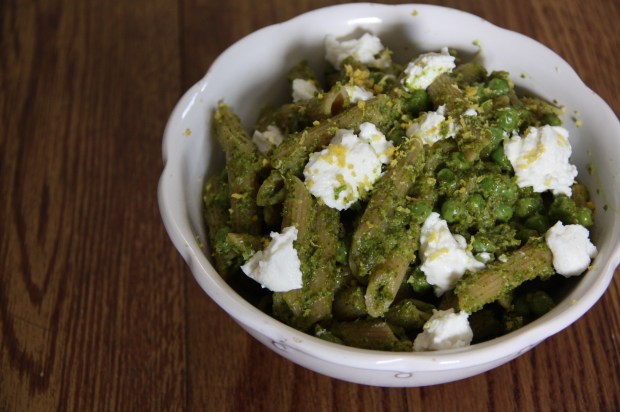
Kale Pesto Pasta with Peas
Level: easy
Serves: 6-8
For the sauce:
1 bunch curly kale
1/2 cup parsley leaves
3 garlic cloves
2 Tbs. pine nutes
1/4 cup olive oil
1 oz. goat cheese plus more for garnish
1 lemon
Salt and pepper to taste
For the pasta:
1 lb Penne Rigate
1 1/2 cup frozen peas, thawed
Put on a large pot of salted water to boil. Squeeze in the juice of half a lemon. Remove the stems from the kale and chop into small pieces. Blanch for 1 minute in the boiling water. Transfer to a bowl. Drain the water from the pot. Refill the pot with salted water and put on to boil again.
Place a dry, nonstick pan over medium heat and toast the pine nuts for 1-2 minutes. Transfer to a bowl.
In a blender, combine garlic, pine nuts, parsley, and kale. Pulse for a few seconds. Pour in olive oil and lemon juice. Blend until combined, but not smooth. Add goat cheese and blend until combined.
Boil pasta for 8 minutes. While the pasta is cooking, add pesto to a large nonstick pan. Stir in peas. After 8 minutes, transfer pasta to sauce pan using a slotted spoon. Toss to coat and allow to cook for 2 more minutes.
Serve with goat cheese and lemon zest.
 Bug Bites