
Beuchu kimchi, or kimchi made from napa cabbage is the most common kind of kimchi, but the word covers all manner of spicy fermented veggies. Kimchi is made through a process called lacto-fermentation. This process contains a series of steps in which harmful bacteria is killed off and beneficial lactobacillus sticks around to convert the sugars in the plants into lactic acid.
I love fermenting for several reasons. I love anything steeped in tradition, so making something that feels connected to ancient cooking methods gets me culinarily hot & bothered. Secondly, it’s a tasty way to cultivate a healthy gut. Fostering a population of healthy bacteria can strengthen the immune system and contribute to healthy digestion. I love the thought of working with natural little microbe buddies to make something delicious and healthy.
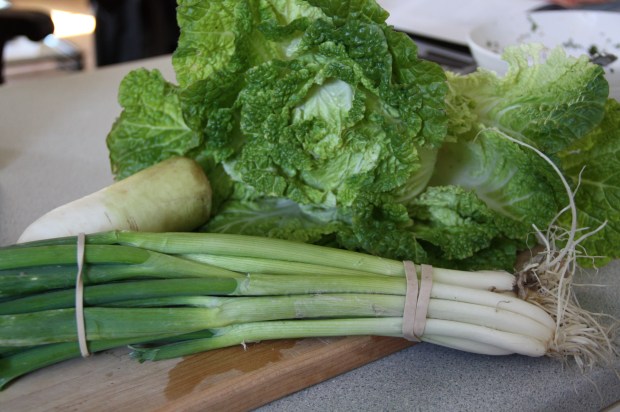
I was able to get daikon radish, scallions, and napa cabbage all fresh from the market today. I love when recipes work out that way, but it does mean my measurements are a bit particular to my size cabbage. Feel free to adjust as you see fit. From reading about kimchi, it seems that each fermenter has a specific way of doing things that they swear is the best. My conclusion: play around with it and see what you like the most!
Cut the head of cabbage in half and remove the cores.
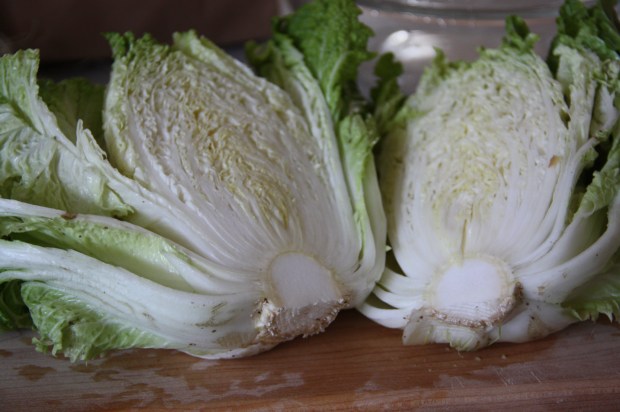
Slice each half into four or five sections. The sections should be about 1-2 inches thick.

Toss the cabbage in a bowl and pour in kosher salt. This is where some math may be necessary. Don’t count on me for conversions. It took blood, sweat, and tears for me to pass calc freshman year and I haven’t taken math since, so you’re on your own for this one. I estimate about 1/2 cup of salt per head of cabbage (~2 lb).
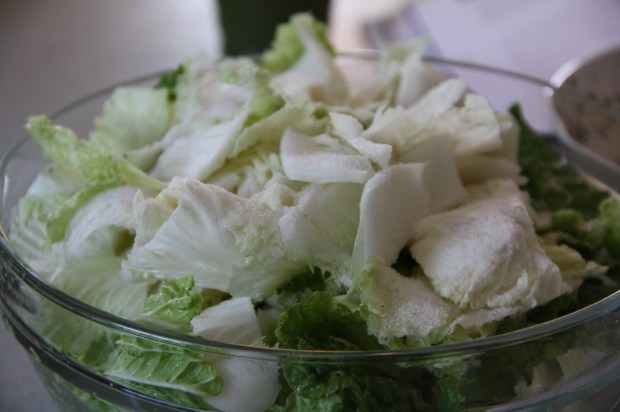
Massage the salt into the cabbage until it is slightly soft. Take care to make sure all the cabbage gets some love. If you only massage half, the other half might get jealous and sabotage the fermentation.
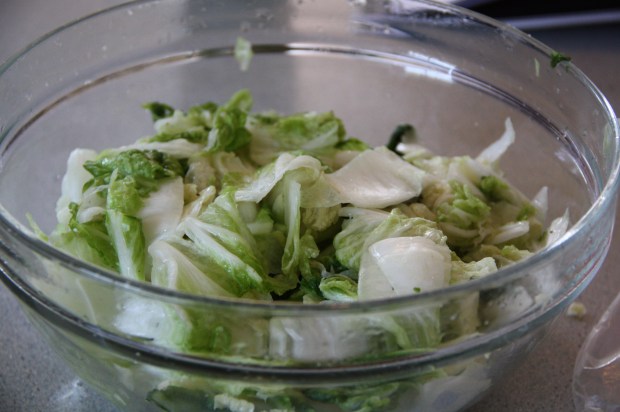
Cover the cabbage with cold water and place a plate and a heavy object on top so all the cabbage is submerged. The heaviest item I could find in my kitchen was a rather large wine bottle. Living in New Orleans, there’s always a surplus of those. Sorry mom 
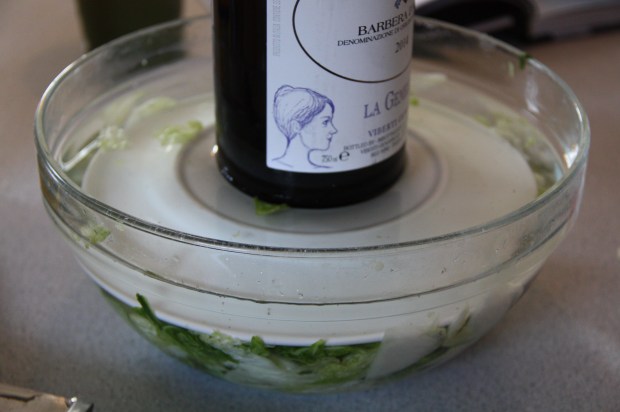
Let the cabbage soak for 1-2 hours. After soaking, rinse the cabbage in cool water.
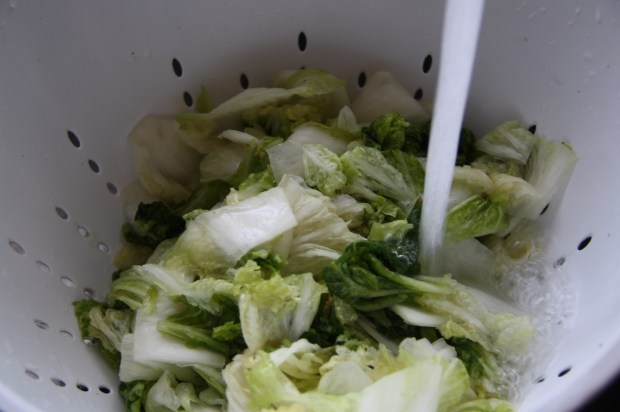
Leave to drain for about 20 minutes. Meanwhile, make the paste. Combine minced ginger, minced garlic, sliced daikon radish, and sliced scallion.
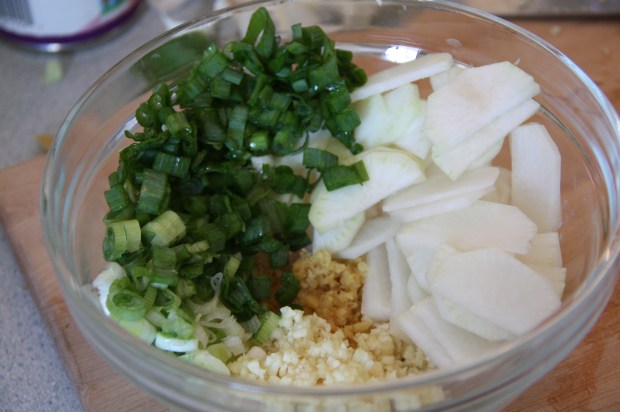
Stir to combine. Add 1-5 tablespoons of Korean red pepper flakes aka gochugaru and 3 tablespoons of water. This is probably a big no-no in terms of authenticity, but it’s vegetarian, so veggies stick to water. Non-veggies add 3 tablespoons of fish sauce. Fish sauce results in a more active fermentation because the chlorine in tap water can kill some of the weaker bacteria.
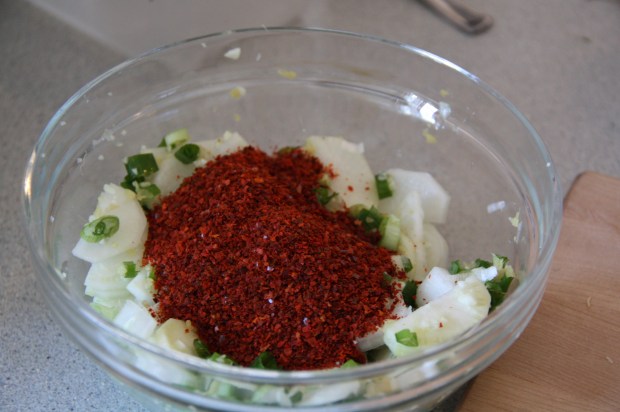
Mix to combine. Take a moment to stop, smell the spice, and appreciate. I added all 5 tablespoons of pepper flakes because I like a spicier kimchi. I use it as a heat element in dishes, but it can be mild or medium to taste.
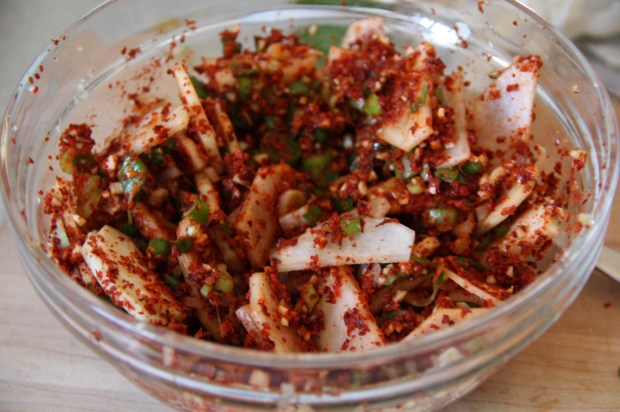
Transfer the cabbage back to the salting bowl, and toss the paste in.
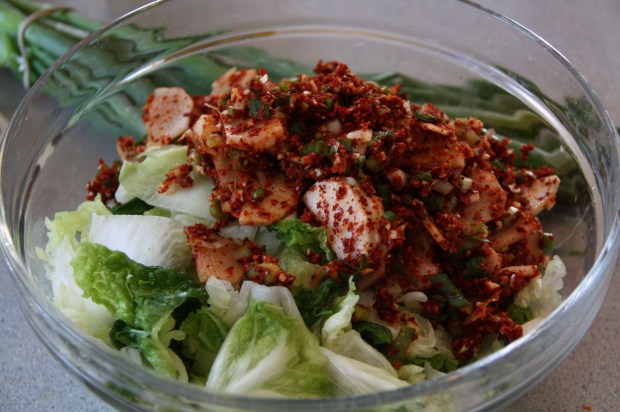
You might want to grab some gloves for this last step. Thoroughly mix the paste into the cabbage, making sure every leaf is coated. I find it’s easiest to do this with my hands, hence the glove suggestion. Or get messy like me and regret it when your fingers start stinging a little.
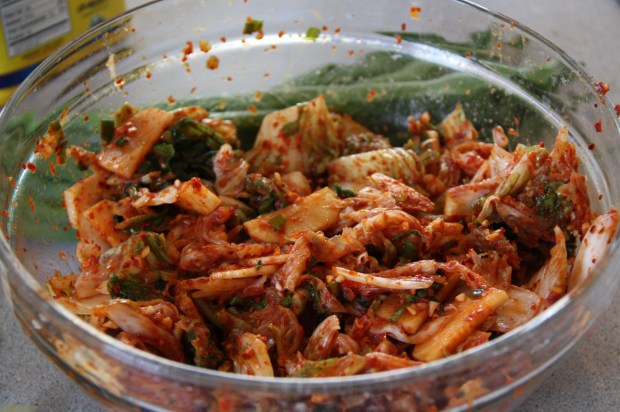
Pack the kimchi into a clean jar. Push it down until the brine covers the cabbage. Set out at room temperature for 1-7 days. Open the jar each day, (CAREFULLY! An active fermentation will possibly cause some briny explosion. While this can be messy, it’s one of my favorite things about kimchi because it’s proof that the cutie bacteria are hard at work.) and push the cabbage down to make sure the brine is always covering all the leaves. Tasting is crucial to make sure the kimchi is to your liking. Try a little piece each day until it’s funky enough for ya, and then move to the fridge to stop fermentation.
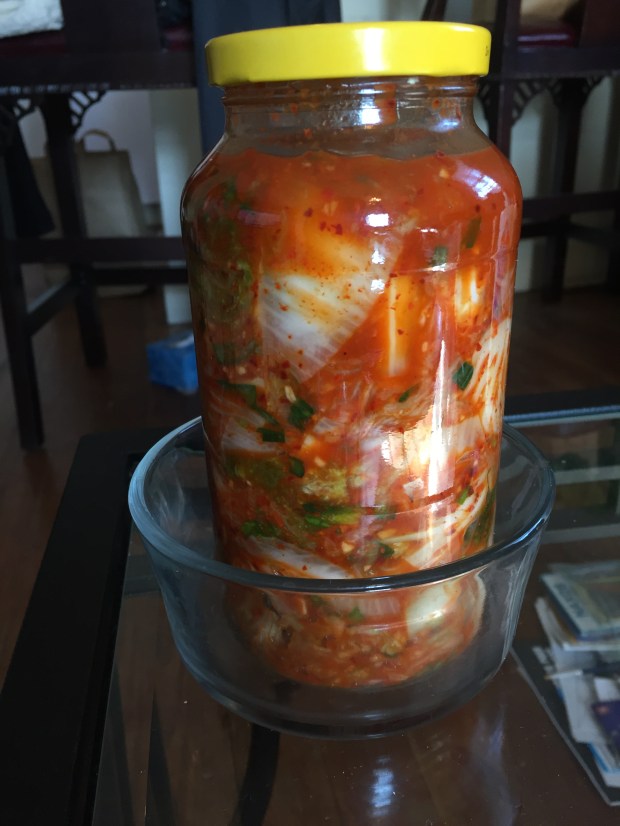
I recommend placing a bowl or plate under the jar to catch any overflow.
Recipes featuring kimchi coming soon!
Beuchu Kimchi
Level: Easy
Ingredients:
For the cabbage:
1 head napa cabbage
1/2 cup kosher salt
For the paste:
1 T minced ginger
2 T minced garlic
3 scallions, thinly sliced
1 small daikon radish, peel and thinly sliced
1-5 T Korean pepper flakes (gochugaru)
3 T water or fish sauce
Cut the head of cabbage in half, remove the core, and slice into 1-2 inch pieces. Combine with salt in a large bowl, and massage until softened. Cover with cool water and place a plate and heavy object on top to submerge all the cabbage. Let sit for 1-2 hours. Rinse cabbage until cool water and let drain for 20 minutes.
Combine ginger, garlic, scallions, radish, gochugaru, and water to make the paste. Massage into drained cabbage until each piece is coated.
Pack into a clean jar and push until cabbage is submerged in brine. Let sit at room temperature for 1-7 days, pushing under the brine each day. Taste and move to the fridge when it is fermented to your taste. I usually let ferment for 5 days.
 Bug Bites
You say to push the cabbage and paste into a jar until it is submerged in the brine. What brine?!
LikeLike
Hi there! The cabbage retains some water from when it was soaked. When you pack the cabbage into the jar, some of this water will be released and will mix with the paste, so there ends up being a red brine that you want to cover the cabbage. Hope this helps!
LikeLike
I must have drained it too well. Oops!
LikeLike